
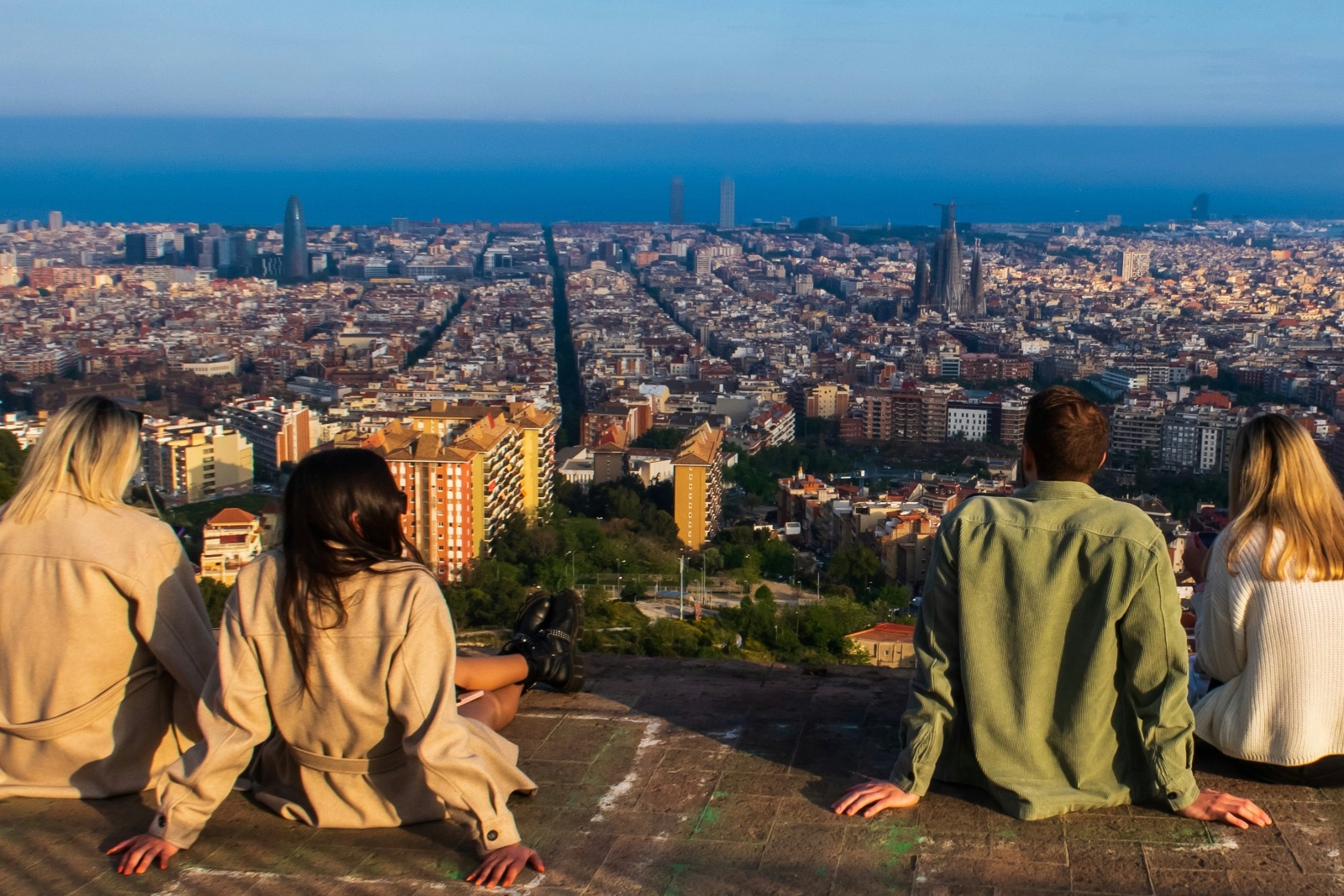
If you're weighing up where to spend a gap year, the list of possible cities gets long very quickly. The question that matters is not which city is most exciting on paper, but which one you could realistically live in for six months or a year: somewhere affordable, easy to get around, and with enough going on that you won't run out of things to do by November.
Barcelona answers that question better than almost anywhere in Europe. It has the beach, the climate and the social life you'd hope for, but it also has the practical things a long stay depends on: reliable public transport, a large international community, and established programs designed for people your age. This article sets out the case, including the parts that are less than perfect.
A lifestyle that lives up to expectations
Many gap year destinations sell a dream. The reality can be a cramped flatshare, a budget that disappears before the end of the month, and a cultural immersion that consists of eating supermarket sandwiches alone in the park. Barcelona comes much closer to matching the picture people imagine.
The beach is part of the city itself. You can finish class at 13:30 and be swimming by 14:00, which changes daily life in a way that's difficult to overstate. Going to the beach isn't a special occasion; it's simply one of the options available after class.
The pace of life is different too. Shops close for a proper lunch, dinner starts around 21:00, and people place real value on time spent with friends rather than constant productivity. If you're coming from the UK's always-on culture, or the American mindset that equates being busy with success, it can feel unfamiliar at first. After a week or two, most students find themselves appreciating the slower rhythm.
You'll work hard during the CertTESOL course, but when classes finish, the city encourages you to slow down. Sitting at a terrace café for an hour isn't considered wasting time; it's part of everyday life.
Outdoor living is woven into the city as well. You can run along the beach, hike in Collserola, swim at the Fòrum, or cycle the seafront to Badalona without spending much money or making elaborate plans. On a gap year budget, having that many free options makes a real difference.
Cost of living
Barcelona isn't as inexpensive as it was fifteen years ago, but compared with London, Paris, Amsterdam or Berlin, it remains relatively affordable. Here's what a typical monthly budget looks like for a student sharing a flat and living sensibly.
Expense | Monthly cost (€) |
|---|---|
Room in a shared flat (including bills) | 550 to 650 |
Food (mix of cooking and eating out) | 300 to 400 |
Transport (T-Usual monthly pass) | ~40 (€25 for under-25s) |
Phone, toiletries, miscellaneous | 50 to 80 |
Going out | 80 to 150 |
Total | ~€920 to €1,320 |
Compare that with London, where a similar lifestyle can easily cost £1,200 to £1,800 per month, or Paris, where a room alone often costs €700 to €900. The savings can go towards weekend trips, language exchanges, or a spontaneous day in Girona.
All of our gap year programs include accommodation, so your biggest monthly expense is already covered. You'll arrive with housing arranged, live alongside other students on the program, and have a resident assistant in the building for support. For many students and parents, that provides both financial certainty and peace of mind.
An international city
Some cities are international because they attract tourists. Barcelona is international because people from around the world choose to live there.
A typical CertTESOL cohort might include students from Scotland, England, the United States and Romania. At the Spanish school, your classmates may come from Morocco, Germany, China or France. The café owner might be Argentinian, and the receptionist at your gym Brazilian.
That diversity shapes daily life. Rather than spending all your time with other English speakers, you'll find yourself surrounded by different languages and cultures, and it's common to hear Catalan, Spanish, English, Arabic and French within the space of an afternoon. People are generally patient with learners, so practising your Spanish feels far less intimidating than many students expect.
Barcelona has been shaped by generations of newcomers. You notice it in the number of language exchanges taking place every week, the ease of meeting people from different backgrounds, and the fact that you're rarely the only newcomer in the room.
The weather
Weather has a bigger impact on a gap year than many people expect, because so much of your time is spent walking, exploring and meeting friends outdoors.
Barcelona enjoys around 300 days of sunshine each year. Winter days typically reach 10 to 15°C, and summers are warm without becoming unbearable, thanks to the sea breeze. Spring and autumn are especially pleasant, with temperatures well suited to hiking, sightseeing, or long afternoons outside.
The climate also helps keep costs down. Much of your social life happens in parks, on beaches or at outdoor cafés rather than in expensive indoor venues.
A city with living culture
Some European cities preserve their history beautifully but can feel frozen in time. Barcelona celebrates its past while remaining energetic and constantly evolving.
There are the landmarks, of course. The Sagrada Familia is breathtaking, and students at Iberia Language Academy often walk past it on their way to class. Park Güell, Casa Batlló and the Gothic Quarter all deserve a place on your itinerary.
The experiences that define a gap year, though, tend to be much smaller. You might stumble across a neighbourhood festa major and spend the evening dancing with locals. You'll find a favourite bar where the owner remembers your order, watch castellers practise in a square in Gràcia, discover a rooftop cinema in July, or come across the Sunday drumming circle in Ciutadella Park.
Learning Spanish in Barcelona
Barcelona is a bilingual city. Street signs are in Catalan, your neighbours may greet you in Catalan before switching to Spanish, and restaurant menus often feature both languages.
Some prospective students worry this will make learning Spanish harder. In practice, the opposite tends to be true. Spanish is spoken everywhere, so you'll hear it and use it every day, while Catalan becomes an interesting addition rather than an obstacle. Most students naturally pick up a few Catalan phrases, which locals always appreciate.
The city also gives you countless opportunities to practise beyond the classroom. You'll use Spanish at cafés, gyms, shops, restaurants, language exchanges, and even on dating apps if that's your thing. Your classes at Iberia Language Academy provide the grammar and structure, and the city gives you somewhere to use it every day.
How Barcelona compares
Barcelona vs London
London is a remarkable city, but it's also one of Europe's most expensive. A gap year there often feels like an extension of everyday life: you won't learn another language, and the experience rarely gives you the sense of stepping into a different culture.
Barcelona vs Paris
Paris is beautiful, but settling in is harder without a solid level of French. The cost of living is higher, and there are fewer established programs and communities designed specifically for English-speaking gap year students.
Barcelona vs Berlin
Berlin has a fascinating arts and technology scene, but its winters are long, dark and cold. German also takes most English speakers longer to learn than Spanish, which makes conversational progress harder during a shorter stay.
Barcelona vs Florence, Lisbon and Prague
These cities all have plenty to offer, but they are smaller and the experience is different. Florence is stunning but heavily geared towards tourism. Lisbon is welcoming and affordable, though it has fewer structured gap year opportunities. Prague is beautiful but less internationally diverse. None of them combine beaches, a major international city, language learning and established gap year programs in quite the same way.
Is Barcelona too touristy?
It's a fair question. Barcelona attracts millions of visitors every year, Las Ramblas is crowded, and parts of the Gothic Quarter can feel overwhelming in peak season.
As a gap year student, though, your experience will be very different from a tourist's. You'll have classes to attend, a local apartment, favourite cafés and neighbourhood routines. Most students spend their time in areas such as Gràcia, Sant Antoni or Poble-sec, where everyday life continues much as it always has.
The city's popularity also brings advantages. Public transport is excellent, English-language support is easy to find while your Spanish improves, and there's a constant calendar of free events and activities. You benefit from the infrastructure without living like a tourist.
What you'll gain from a gap year in Barcelona
Practical outcomes
A Trinity CertTESOL, an internationally recognised teaching qualification
Spanish language skills that develop according to your program length
A SIELE Spanish certificate on the Semester and Double Semester programs
Teaching experience
Friendships with people from around the world
Confidence navigating life in another country and another language
Personal growth
Many students also leave with something less tangible. They discover a slower approach to life, one that places greater value on community and time spent outdoors, and they develop healthier habits simply because parks, beaches and public spaces become part of daily life.
Perhaps most importantly, they learn they can arrive somewhere knowing nobody and build a life for themselves. That confidence stays with them long after the gap year ends.
The verdict
Barcelona isn't perfect. The bureaucracy can be frustrating, August is hot and humid, and like any major tourist destination, you need to stay aware of pickpockets and look after your belongings. Those are small trade-offs for what the city offers.
For a gap year, Barcelona strikes a rare balance. It's large enough to stay interesting for months, compact enough to feel familiar quickly, and international enough that you'll never struggle to meet people while still feeling immersed in Spanish life.
If you're comparing destinations, think about what you want the year to achieve. A recognised qualification? Another language? Greater independence? A city you can enjoy almost every day of the year? Barcelona brings those together in a way few European cities can. It doesn't feel like a compromise; it feels like the right place to spend a gap year.
Ready to find the right program length for your Barcelona gap year? Start with our guide, Which Program Is Right for You?, or see all dates and fees for upcoming start dates.